Building history: reading the walls of your home
Is your wall pisé, pebble or stone? The answer changes how it should be repaired. Around Avignon, the Alpilles and the Luberon, people have always built with what the ground provided: earth on the plains, river pebbles beside the rivers, soft stone close to the quarries. This page helps you recognise your wall, and tells you what we do, and what we avoid, when repairing it.
A heritage you can read in its walls
An old house in our region was almost always built from materials found close by. Where an easily worked stone was quarried, people built in stone. Where the river had left pebbles, they were laid in courses. On the plains, people also built in earth. A single village, sometimes a single house, can combine all three: a stone base, an upper storey in earth, a cornice of tiles.
Reading a wall means reading the ground it came from. It is the first thing we do before touching it.
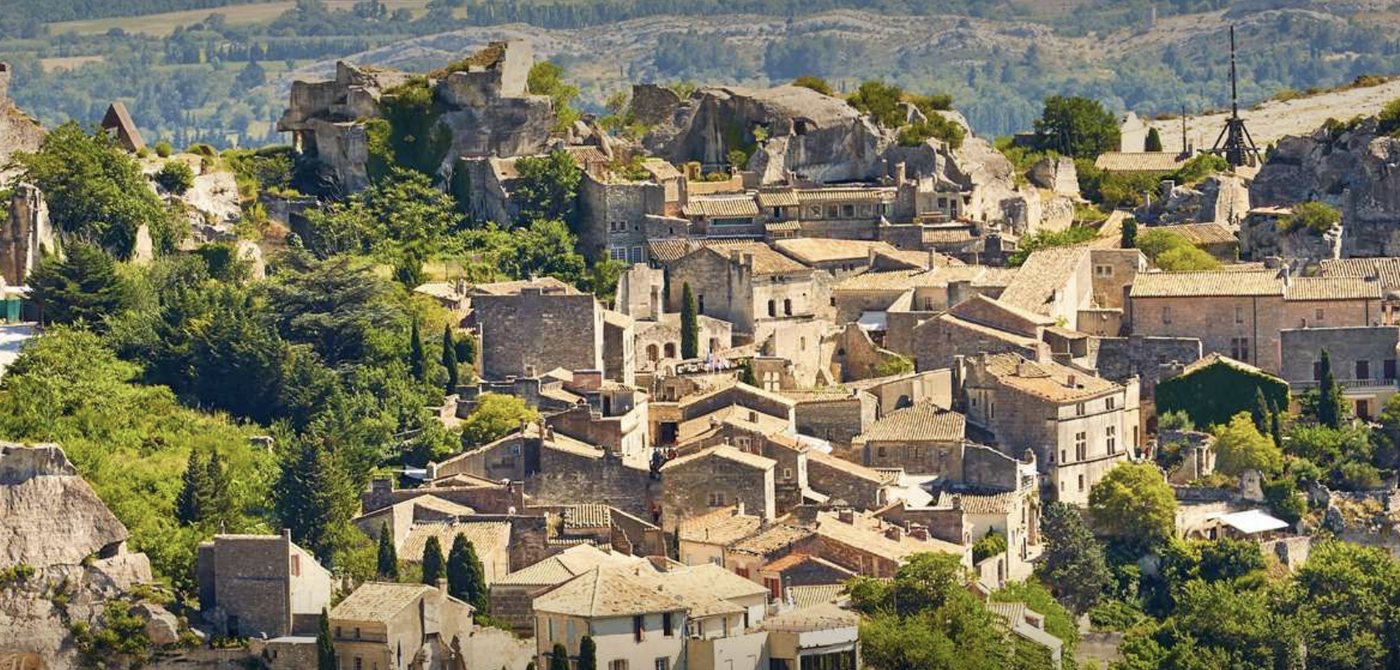
Pisé, or earth concrete
A pisé wall is a wall of clayey earth, also known as “béton de terre” (earth concrete). The earth, barely damp, is rammed in successive layers into shuttering, known in French as a banche, until it forms a solid, compact wall. The result is called banché.
Building with earth is very old: as early as the 7th millennium BC, in Mesopotamia, clayey earth was already being used to make structures. Traditional earth construction was stabilised with lime; cement came much later. Pisé is widespread across France, notably in the centre of the country, in Rhône-Alpes and in Midi-Pyrénées.
It is found here too. In the Vaucluse, raw earth was used where stone was scarce, mostly on the plains, for farms and outbuildings. In L’Isle-sur-la-Sorgue it was called “tapie”; in the outskirts of Carpentras, people were already building in earth in the 13th century.
What an earth wall tolerates badly is water that can no longer escape. A waterproof render or coating traps it: the render lifts and saltpetre appears. By contrast, it copes well with a lime render, which lets it breathe, and with a wall base kept dry. Some vertical cracks, at the joints between lifts of shuttering, are often harmless; others come from the ground, and then we have to look beneath the wall.
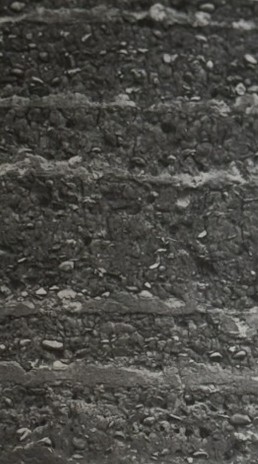
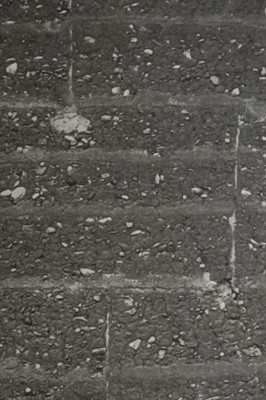
Pebbles
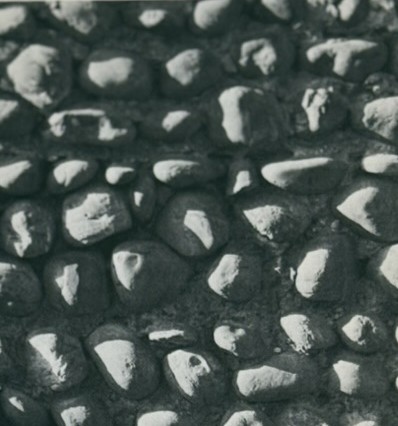
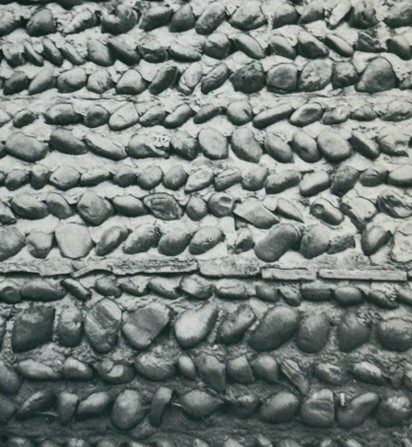
Along the rivers and near the Crau, pebbles were close at hand. In the Alpilles, to the south, near the Crau, some walls are built of pebbles laid in courses and bound with lime mortar. Elsewhere in the South, rows of flat pebbles or bricks were also run right through the wall, tying its two faces together, with the joints staggered from one course to the next.
A pebble is round and smooth: it does not grip by itself, and it is the mortar that holds the wall together. When the wall deteriorates, we repair it course by course with a lime mortar of the same kind, not with an over-hard cement that would not move with the wall.
Stone
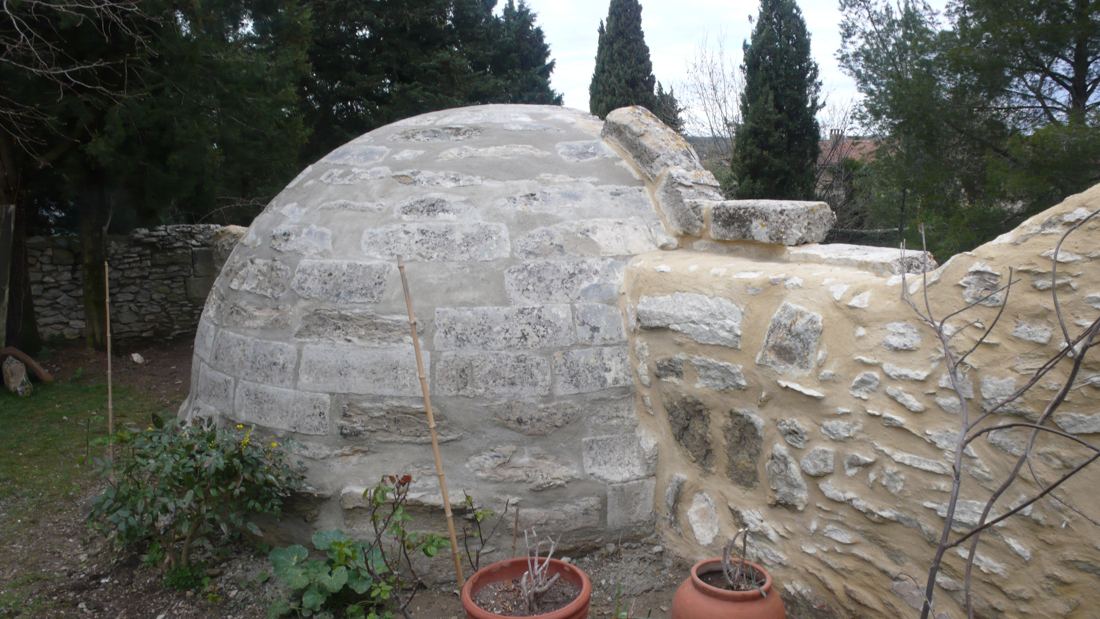
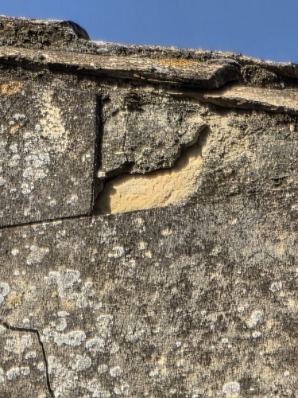
In the Luberon and the Comtat Venaissin, people built in molasse, a soft sandy limestone that is easy to quarry and dress and has been worked since Roman times. Its stones take the names of their villages: Lacoste, Bonnieux, Ménerbes, Oppède, Caromb, Pernes. Quarries are still active at Oppède, Maubec and Buoux. In Avignon, the molasses of Villeneuve-lès-Avignon and Les Angles, on the Gard side, and that of Barbentane, in the Bouches-du-Rhône, were widely used.
In the Alpilles, the stone is a soft shelly limestone, taken from Fontvieille, Les Baux and Saint-Rémy. Everywhere, dressed stone was reserved for the parts of a wall that work hardest: corner quoins, window and door surrounds, cornices. The rest of the wall is rubble stone (moellons), less regular stones bedded in lime. In the hills, dry stone, assembled without mortar, gave us retaining walls and the huts known as bories.
Mortars and renders: lime, then cement
For laying and rendering, people used earth, plaster and lime. Lime, mixed with local sands, gave the smooth renders that protected the wall while letting it dry out.
Cement is more recent: artificial cement was developed from 1817, and cement finishes spread through the region from the end of the 19th century. It is hard and barely porous, which makes it very useful on a modern structure. On an old wall, it traps moisture, which then looks for another way out, through the stone, the earth or the neighbouring render.
Roofs and details
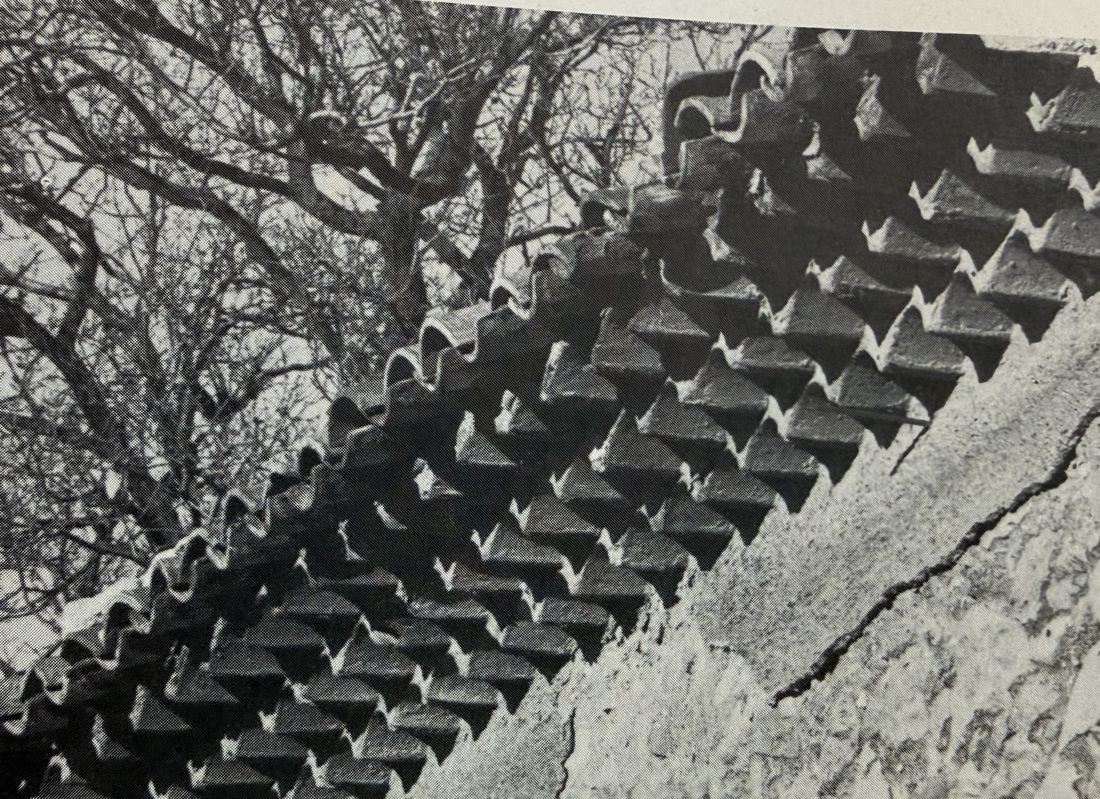
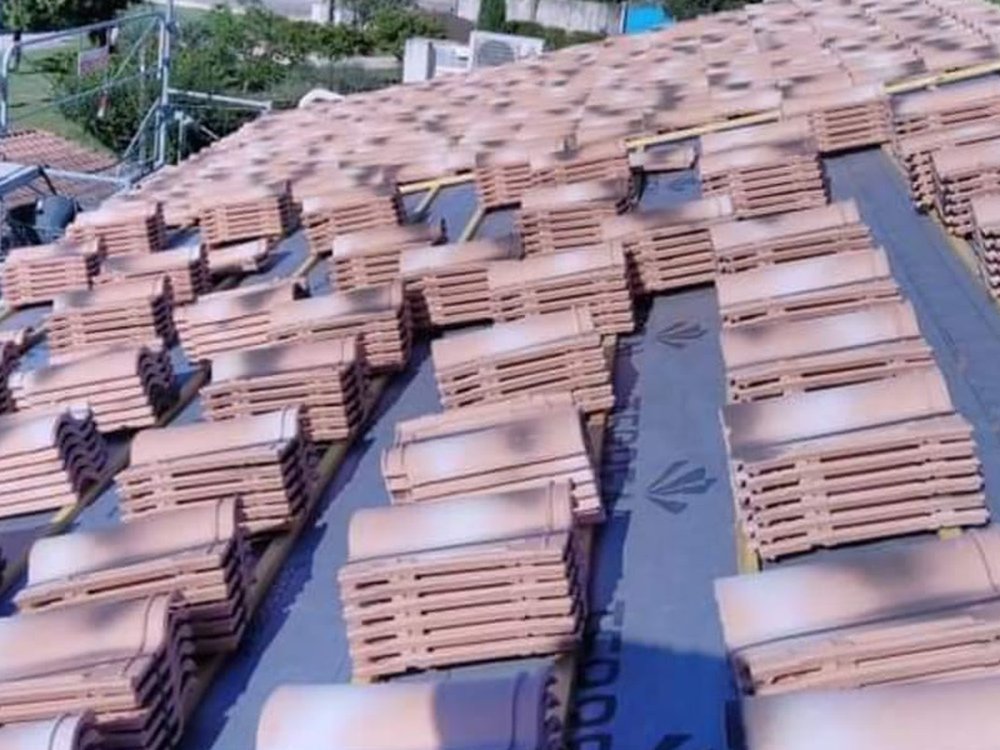
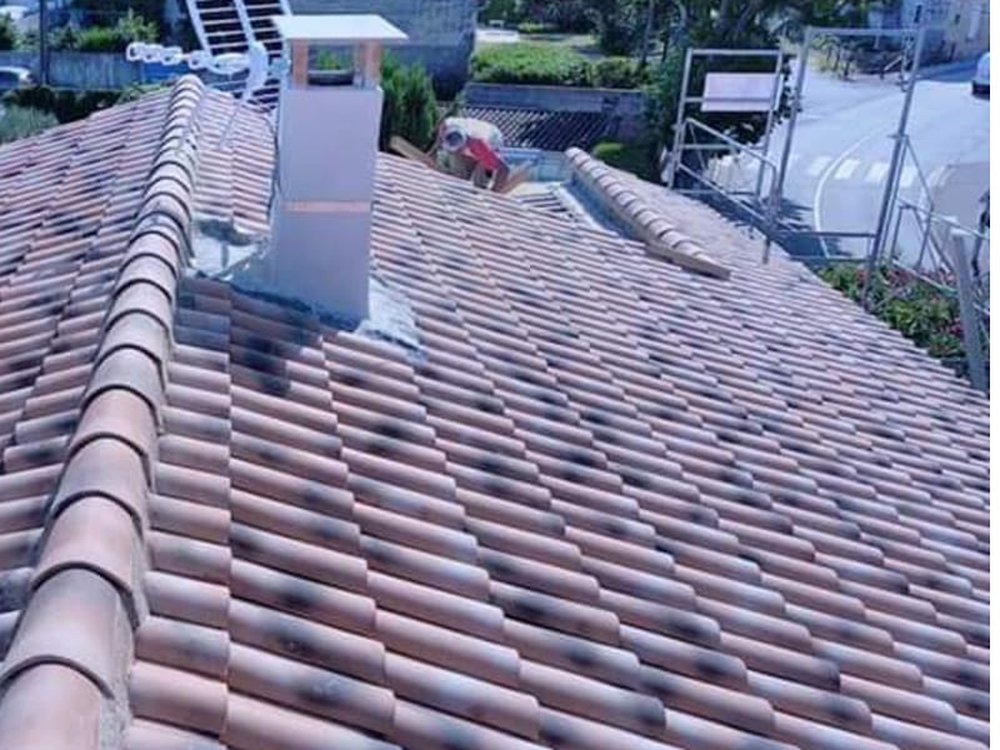
Old roofs in the region are almost all of canal tiles. Beneath the eaves, the génoise, those rows of canal tiles laid projecting from the wall, carries water away from the façade; it is said to have come to us from Italian masons. Where means allowed, the ground floor was vaulted. These are details that go largely unnoticed, yet they keep the house alive: we repair them with the same materials.
How to recognise your wall
Four clues, without taking anything apart:
- The surface, where the render has fallen away. Round pebbles in rows: a pebble wall. Stones with edges, of uneven sizes: rubble stone. A brown, compact material, sometimes in horizontal bands: possibly earth.
- The foot of the wall. A base of stone, pebbles or fired brick beneath a wall of softer material is a sign of earth: it was kept away from the ground.
- The corners and openings. Dressed stone or fired brick at the corners and around the windows: the most exposed parts were reinforced.
- What the wall does with water. Saltpetre, blistering render, a damp wall base: the wall can no longer let its water out, whatever it is made of.
None of these clues is proof. The only way to be sure is to come and look: we look, we record what we find, and we tell you what we have found.
What this changes when repairing
What we avoid
- A cement render or cement pointing on an old wall.
- A coating that blocks water vapour, on earth in particular.
- Micro-abrasive blasting of stone.
- Replacing what can be kept.
What we do
- Survey and photograph the wall, and trace where the water comes from: roof, gutter, ground, wall base.
- Repair with materials of the same kind as the original: lime, earth, local stone.
- Redo the render in lime, so that the wall can breathe.
- When the problem comes from the ground, underpin the foundations, with a concrete block or a reinforced-concrete buttress.
Not everything is repaired in the same way, and sometimes part of a wall has to be rebuilt. We tell you before we put a figure on it. To understand a crack, see Cracks and drought; for how a project proceeds, Design and project management; for renders, stone and roofing, Restoration of old buildings.
A skill of family and teams
Our family and our teams have mastered these various historic building techniques over three generations. We would be glad to share these old methods with you: these are buildings that are good to live in.
The first advisory visit is free and carries no obligation.
06 11 75 35 57 · entrepriseeg3@gmail.com · Write to us
Tell us about your project.
The first visit is free and without obligation. We work around Avignon, in the Alpilles, the Luberon, the Comtat Venaissin, the Uzès area and the Golden Triangle of Provence — and further afield depending on the project. Write to us, and we will reply in writing.
entrepriseeg3@gmail.com+33 6 11 75 35 57
Read our Google reviews →
Leave us a Google review →
Office: 2 place Alexandre Farnèse, 84000 Avignon
Yard: zone artisanale du Colombier, 13150 Boulbon